
 By
By Key takeaways
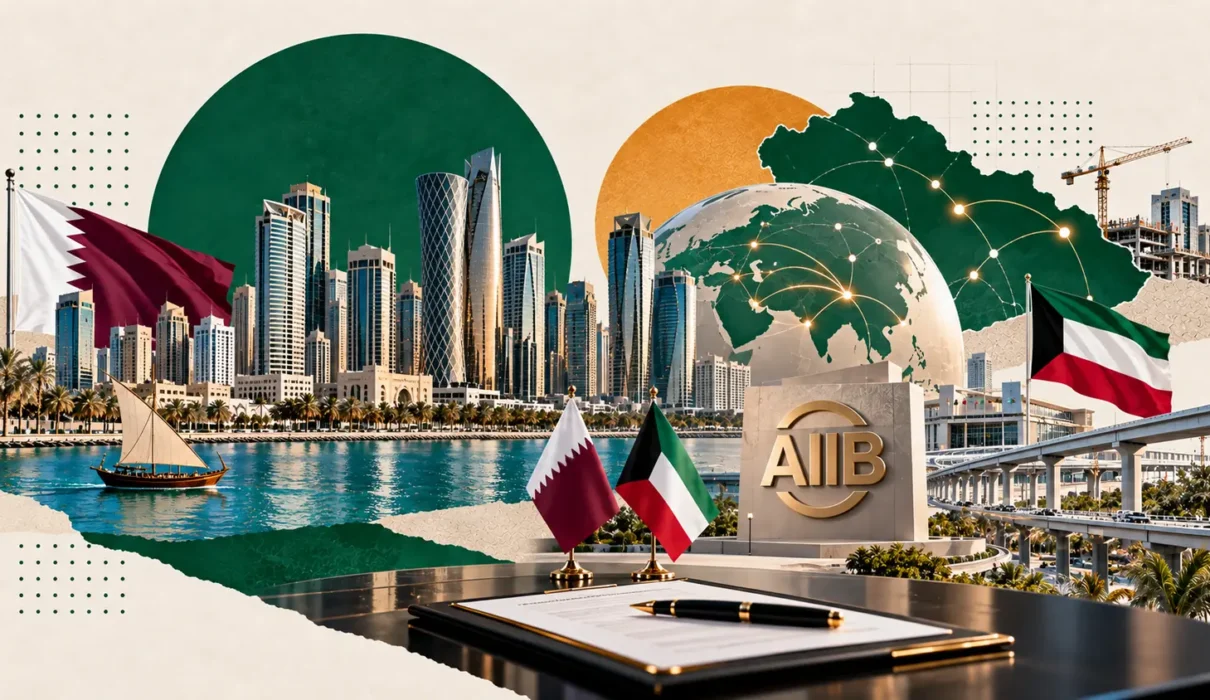
- Qatar hosted the AIIB’s 11th Annual Meeting in Doha on September 28 and 29, chairing the bank’s Board of Governors for 2026.
- On the sidelines, Qatar and Kuwait signed a new memorandum of understanding on financial cooperation.
- The gathering doubles as a signal of Qatar’s broader push to position Doha as a hub for multilateral finance and infrastructure capital.
Qatar’s AIIB Annual Meeting puts Doha at the center of infrastructure finance
Doha spent two days this week hosting the people who decide where billions of dollars in Asian infrastructure funding actually go. The Asian Infrastructure Investment Bank opened its 11th Annual Meeting in the Qatari capital on September 28, under the theme “Tomorrow’s Infrastructure: Impact and Innovation,” according to AIIB’s own newsroom and Gulf Times. The gathering brought together governors, senior officials, clients and partners from across the bank’s membership, and marked what AIIB describes as its transition into a second decade of operations.
Qatar is not just hosting. Under an agreement signed in 2025, the country also holds the chair of AIIB’s Board of Governors for 2026, giving Doha a formal seat at the head of the table rather than just a venue role. Sessions at the meeting covered sustainable infrastructure, climate finance, public digital infrastructure, cross-border connectivity and resilience building, all areas where Gulf states have been trying to attract capital and expertise well beyond oil and gas.
The Kuwait MoU signed on the sidelines
The most concrete outcome for Gulf watchers came away from the main conference floor. Qatar’s Minister of Finance, Ali bin Ahmed Al Kuwari, and Kuwait’s Minister of Finance, Dr Yacoub Al Sayed Al Rifai, signed a memorandum of understanding on financial cooperation during the meeting, according to the Qatar Tribune and GCC Business News. The agreement is built around exchanging financial expertise and information and sharing experience between the two ministries, language that signals closer coordination rather than a specific joint project.
Officials on both sides framed the deal as a reflection of longstanding ties between Doha and Kuwait City. But the timing matters too. Kuwait has spent 2026 modernizing its own financial toolkit, passing legislation that allows sukuk borrowing for the first time alongside a new mortgage law, while Qatar has been striking a run of large asset management partnerships, including a reported $20 billion arrangement being discussed with JPMorgan Asset Management on top of an earlier $25 billion agreement with Goldman Sachs. A finance ministry MoU with Kuwait fits neatly into that pattern of Qatar deepening financial relationships across the region while it also courts Wall Street.
Why this matters beyond the signing ceremony
Multilateral bank meetings can look like diplomatic theater, but the AIIB gathering carries real weight for Gulf infrastructure financing. AIIB has become an active lender and co-investor in emerging market infrastructure since it was founded in 2016, and a member state chairing its Board of Governors gets more influence over how the bank prioritizes future lending, including any future flows toward Gulf-adjacent projects in Asia and Africa that Qatari and other regional investors care about.
For Qatari and Kuwaiti businesses, the practical takeaway is less about this specific MoU and more about the direction of travel. Doha is positioning itself as a genuine node in global infrastructure finance, not just a source of sovereign wealth capital. That has knock-on effects for local banks, asset managers and advisory firms who stand to pick up mandates as more multilateral and cross-border deals get structured through Qatari institutions.
Kuwait, for its part, gets a visible partner as it tries to catch up on financial market modernization after years of slower reform relative to Qatar, Saudi Arabia and the UAE. A financial cooperation MoU will not by itself move markets, but paired with Kuwait’s new sukuk and mortgage laws, it points to a government trying to signal openness at the same moment its neighbors are competing hard for the same investor attention.
Read more: QNB $2 Billion Loan: Why Asia Just Bet Big on Qatar’s Banks.
Sources: Gulf Times, Qatar Tribune, GCC Business News.