
 By
By Key takeaways:
- Microsoft pledged more than $10 billion through 2030 for cloud, AI and connectivity projects across the UAE, Saudi Arabia, Qatar and Kuwait.
- The framework, unveiled at the UN General Assembly, adds a “digital resilience initiative” and a regional cybersecurity champions network on top of existing data centre commitments.
- It lands as Riyadh and Abu Dhabi compete for the title of the Gulf’s AI hub, with Saudi Arabia alone drawing roughly $15 billion in tech deals at LEAP 2026.
Microsoft Gulf AI investment tops $10 billion through 2030
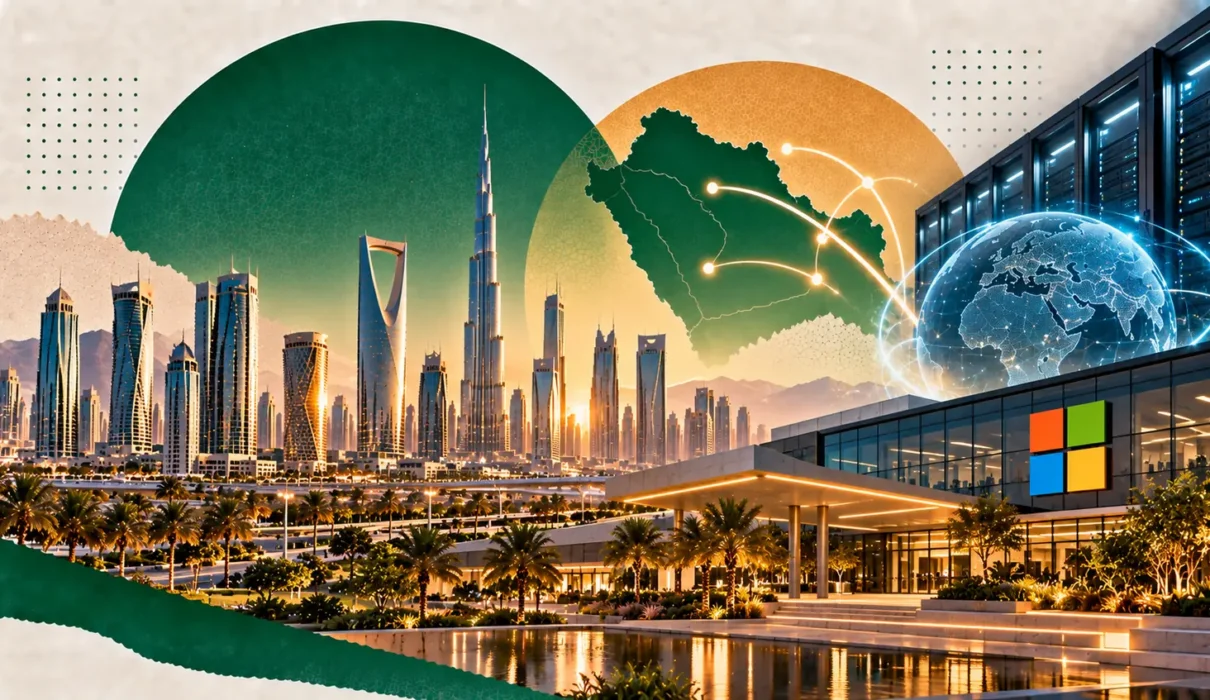
Microsoft used the sidelines of the UN General Assembly in New York to unveil a new Middle East technology framework on September 23, committing more than $10 billion in fresh spending across the UAE, Saudi Arabia, Qatar and Kuwait by 2030. The pledge covers cloud and AI infrastructure, subsea and terrestrial connectivity, and a new digital resilience initiative built for a region that has spent the past year absorbing the economic shocks of the US-Iran war.
Microsoft president Brad Smith framed the investment as a matter of responsibility as much as opportunity. “This new framework reflects that responsibility and our determination to help the region translate AI ambition into enduring economic and societal benefit,” he said, adding that the company’s ties to the Middle East “run deep” and its commitment “will remain steadfast.”
Why digital resilience is now part of the pitch
The addition of a dedicated resilience initiative is a notable shift from Microsoft’s earlier Gulf announcements, which leaned heavily on raw compute capacity. Smith linked the change directly to the conflict that has rattled the region since February. “Conflict in the Middle East has reinforced the connection between digital resilience and digital sovereignty,” he said, noting that Microsoft has already worked with regional customers on business continuity options tailored to different operational and regulatory needs.
That resilience push will run alongside a new network of Microsoft cybersecurity champions embedded in the UAE, Kuwait, Qatar and Saudi Arabia, intended to help governments turn the company’s threat intelligence into concrete national policy. The company also plans to expand its AI for Good Lab work, first launched in Abu Dhabi in 2024, to address gaps in education, healthcare and agriculture that AI adoption could otherwise widen.
A crowded field of Gulf AI bets
The Microsoft announcement lands in the middle of an increasingly competitive regional race. Saudi Arabia has been positioning Riyadh as the Gulf’s AI hub through LEAP 2026, where deals with Amazon, Nvidia and Microsoft itself totalled around $15 billion, according to Fortune. San Francisco-based Together AI separately signed with Saudi-backed HUMAIN earlier this month to build a 250-megawatt AI data centre in the kingdom.
The UAE, meanwhile, continues to lean on the Stargate Initiative in Abu Dhabi, a joint venture between G42, Microsoft and OpenAI that is being built as the country’s largest data centre. Naim Yazbeck, Microsoft’s Middle East and Africa president, said the new framework builds on that momentum rather than starting from scratch. “Countries across the region aren’t waiting for the future of AI to be written elsewhere, they’re helping shape it themselves, and our role is to be a long-term partner in that journey,” he said.
For Kuwait and Qatar, both newer entrants to Microsoft’s list of priority Gulf markets, the framework signals a broader bet that AI infrastructure spending will keep flowing even as the region manages a fragile ceasefire and the fallout from disrupted shipping and energy exports. Bringing four countries into a single, named commitment also gives Microsoft a cleaner story to tell investors and regulators than a string of country-by-country deals, and it puts pressure on rivals such as Amazon Web Services and Google Cloud to match the scope, not just the size, of the pledge.
What it means for Gulf businesses
For enterprises across the GCC, the practical impact will show up first in connectivity and uptime. Microsoft’s plan to invest in subsea and terrestrial links is aimed squarely at reducing the region’s dependence on a small number of vulnerable routes, a vulnerability Bloomberg has flagged repeatedly as Gulf data centres face heightened security risk. Faster, more resilient links tend to precede lower latency and better pricing for the cloud and AI services businesses are already buying.
The cybersecurity champions network could matter just as much for mid-sized firms that lack in-house security teams, giving them a more direct line to Microsoft’s threat intelligence than they had before. Combined with the AI for Good Labs expansion, the framework reads less like a single data centre announcement and more like an attempt to embed Microsoft across the next five years of Gulf digital policy.
The timing is not incidental either. With sukuk issuance down and real estate developers pulling back on off-plan launches elsewhere in the region, technology has become one of the few sectors where Gulf governments can point to accelerating, not slowing, foreign commitment. That makes announcements like this one useful diplomatic cover as much as commercial news, and it is likely why Microsoft chose the UN General Assembly, rather than a regional tech conference, to make it.
Sources: The National, Fortune, Bloomberg.
Read more: Gulf AI Infrastructure Investment: Inside the Race to Own the Data Highways