
 By
By Key takeaways
- Abu Dhabi hotels must apply 20 of 65 Emirati Dhiyafa Standards starting in the first quarter of 2027, with 10 compulsory and 10 left to each property’s discretion.
- Requirements include a staff member in Emirati attire at arrival, Arabic coffee and local dates for guests, and at least three Emirati dishes on the menu.
- The rollout is tied to Abu Dhabi’s Tourism Strategy 2030, which targets 39.3 million visitors and Dh90 billion in hospitality GDP.
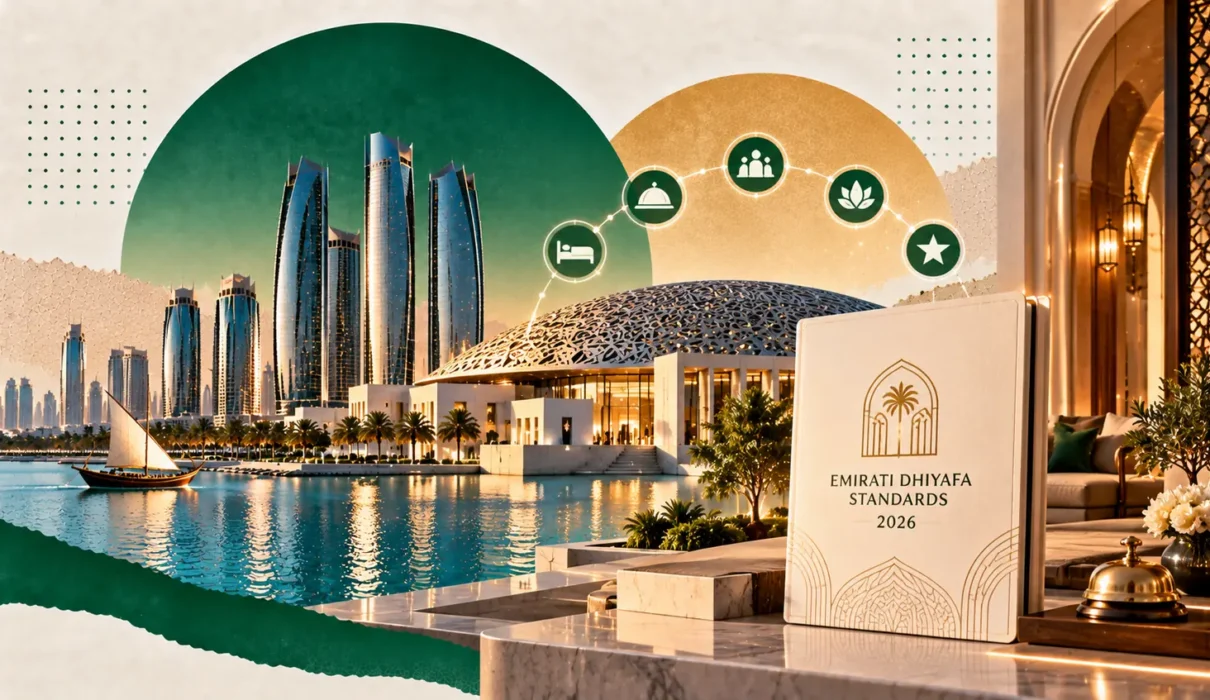
Checking into a hotel in Abu Dhabi is about to feel noticeably more local. The Department of Culture and Tourism, known as DCT Abu Dhabi, has introduced the Emirati Dhiyafa Standards, a framework that places Emirati culture at the center of the guest experience across the emirate’s hotels, DCT confirmed to The National.
Hotels will need to apply 20 of the 65 standards, with 10 compulsory and the other 10 left to each property’s discretion. Hotel apartments face a lighter bar: a minimum of 10 standards, five of which are compulsory. The rules are expected to take effect in the first quarter of 2027.
What hotels will actually have to change
The published requirements are specific rather than aspirational. Hotels must send pre-arrival messages introducing guests to UAE culture and heritage, and must station one employee in Emirati attire at the entrance to greet arrivals with the phrase “Marhaba al-saa,” meaning welcome at this hour of the day. Guests should be offered Arabic coffee and locally produced dates on arrival, and the menu must include at least three Emirati dishes, with staff trained to explain them. Public areas also need at least one design element drawing on Emirati heritage, and hotels must provide website links to the country’s history and culture.
Hoteliers say the framework fits guest demand
Catalina Susan, general manager of Marriott Al Forsan in Abu Dhabi, said her property is already preparing. “It is a great idea for guests to embrace the heritage, culture and generosity of the UAE in hotels,” she said, adding that the hotel will send pre-arrival cultural information, add three Emirati dishes to its main restaurant menu, and have a staff member in Emirati attire welcome guests in the lobby.
Marwa Mustafa, hotel manager of Bloom Arjaan by Rotana, said the framework “encourages hotels to bring that cultural understanding into the experiences guests encounter every day,” and that a phased rollout will let her team prepare colleagues’ cultural knowledge, the arrival experience and opportunities to introduce Emirati cuisine well ahead of the 2027 deadline.
The timing: a hospitality sector still finding its footing
The cultural push lands as Abu Dhabi’s hotels work through a slower year. The initiative follows months of disruption tied to Iran’s attacks on the UAE, which began at the end of February 2026. Susan said Marriott Al Forsan held occupancy above 90 percent at the peak of the war as domestic and regional travelers filled in for international guests, and is currently running around 86 percent occupancy, with hopes that Formula 1 season will bring a fresh wave of international visitors. “Despite the geopolitical challenges, we managed to exceed the budget in revenue, in profit, in regards to guest satisfaction,” she said, though she noted booking volumes remain slower than the prior year.
Part of a bigger 2030 push
The Emirati Dhiyafa Standards sit inside the wider Abu Dhabi Tourism Strategy 2030, which aims to lift annual visitor numbers to 39.3 million and grow the hospitality sector’s contribution to GDP to Dh90 billion, while creating 178,000 jobs along the way. Saleh Mohamed Al Geziry, director general for tourism at DCT Abu Dhabi, framed the standards as translating “timeless values into a framework that will enrich every stage of the visitor journey by embedding our cultural identity within the hospitality experience.”
For hotel groups, the standards add a new compliance item to an already busy runway toward 2027, alongside occupancy recovery and rate management. But for a market competing with Dubai, Riyadh and Doha for the same international travelers, distinctive cultural branding may prove to be a genuine differentiator rather than just another checklist.
Sources: The National.
Read more: Abu Dhabi Hospitality Standards: What Hotels Must Do Before 2027.