
 By
By Bahrain’s Supreme Council of Health has signed a contract with Solidarity Bahrain to begin implementing the country’s long-delayed Health Insurance for Residents programme. The agreement moves a compulsory insurance scheme that has been years in planning from paperwork into an actual rollout, with direct consequences for employers, insurers and roughly the entire non-Bahraini resident population.
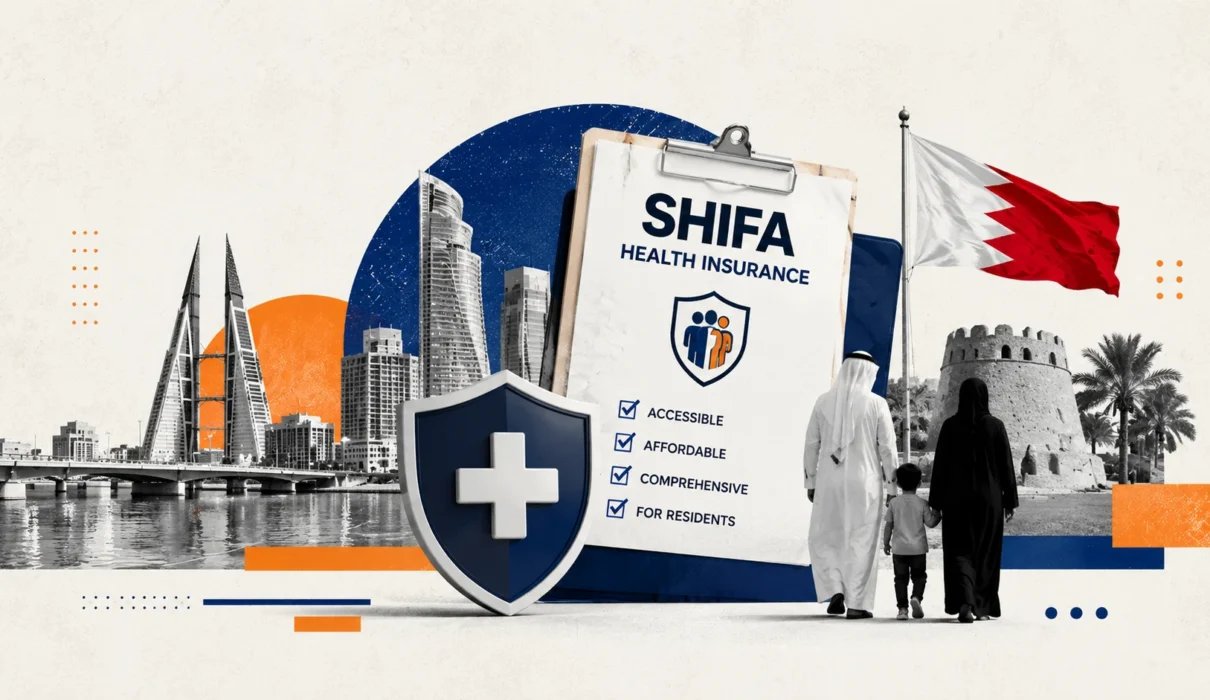
- Bahrain’s Supreme Council of Health (SCH) signed an implementation contract with Solidarity Bahrain on August 13, 2026, to launch the Health Insurance for Residents programme.
- The programme sits under the Social Health Insurance Fund, known as SHIFA, established under Bahrain’s 2018 Health Insurance Law.
- Employers will be required to enroll non-Bahraini staff and pay subscription fees, shifting healthcare financing away from a fully state-funded model.
From law on paper to contract in hand
Bahrain has technically required health insurance for citizens, residents and visitors since Health Insurance Law No. 23 of 2018 took effect. In practice, the compulsory scheme for expatriate residents has slipped past several planned launch dates, with soft launches originally pencilled in for 2023 and 2024 that did not fully materialise on schedule.
The contract signed this week between SCH and Solidarity Bahrain changes that dynamic. According to GCC Business News, the agreement represents a new stage in developing the healthcare and insurance framework available to residents, with SCH describing the infrastructure as ready for the first phase of implementation.
What SHIFA actually covers
The programme runs through Bahrain’s Social Health Insurance Fund, or SHIFA, an independent entity created specifically to administer the mandatory scheme. Under the law’s structure, the package for Bahraini citizens is funded by the state and covers treatment at government facilities. Foreign residents, by contrast, are covered either directly through the fund or through private insurers such as Solidarity Bahrain, with employers on the hook for enrolling staff and paying the associated subscription fees.
Alwast News reports that the project aims to build a sustainable, self-funded insurance system for residents rather than one reliant on continuous state subsidy, a distinction that matters given Bahrain’s tighter fiscal position compared with its Gulf neighbours.
Why the Bahrain health insurance rollout matters for employers now
For companies operating in Bahrain, this is the clearest signal yet that mandatory enrollment and fee obligations are moving from regulatory theory to operational reality. Businesses that have budgeted around eventual compliance costs will want to watch for SCH guidance on enrollment timelines and fee schedules as the first implementation phase proceeds.
For insurers, the Solidarity Bahrain partnership sets a precedent. Other private insurers operating in the Kingdom will likely look to structure similar arrangements with SCH as the scheme expands, particularly if this first phase runs smoothly. The Bahrain Institute of Banking and Finance’s recent AI hackathon with Bahrain Kuwait Insurance, where staff built working AI agents over a three-day programme, suggests local insurers are already preparing the technology stack to handle a larger, more automated book of mandatory business.
The regional context
Bahrain is not alone in tightening compulsory health coverage. Qatar’s Ministry of Public Health has flagged plans for a new public health insurance system, while Saudi Arabia’s private insurers are leaning on AI-driven pricing tools, such as DESAISIV’s Fair Market Pricing Engine, to manage corporate health costs more precisely. Bahrain’s SHIFA rollout fits the same regional pattern: governments shifting health financing risk toward structured, partly privatised insurance markets rather than open-ended state coverage.
What happens next depends largely on execution. Bahrain’s compulsory scheme has missed deadlines before. A signed implementation contract is a genuine step forward, but employers and insurers alike will be watching whether this phase actually reaches full operation on the timeline SCH has set out.
Read more: How Saudi insurtech DESAISIV is using AI to reshape corporate health insurance pricing.
Sources: GCC Business News, Alwast News, P4H Network.